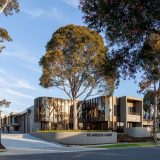
When a 12-storey high-density development site at 22A Abbott Street, Sandringham, hit the market recently, the response told a story the headline numbers don’t. Multiple offers landed from both local and established developer buyers who, six months ago, were sitting firmly on their hands.
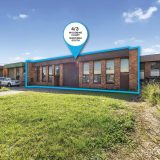
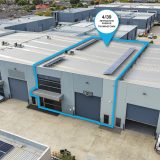
A few suburbs north, an owner-occupier paid $11.0 million for 44 Phoenix Street, Brunswick, moving decisively to secure scarce, well-located industrial stock in Melbourne’s tightly held inner north.
Two transactions, one message: while Australia’s commercial property market remains subdued, the smart money is quietly positioning for the turn.
“This is a holding pattern, not a downturn,” says Matt Hoath, Director at GrayJohnson. “Developers are re-entering, owner-occupiers are buying, and scarce quality stock is underpinning pricing. The market is set up for a recovery; it’s just waiting for two overhangs to clear.”
Those overhangs? Interest rate certainty and the Victorian state election on 28 November. Until both resolve, expect the market to hold its breath with a genuine pickup unlikely before November–December.
The macro drag
The Reserve Bank held the cash rate at 4.35 per cent in August, its second consecutive hold, but pointedly kept the door open to further tightening “if required.” Rate cuts aren’t expected until 2027, and elevated oil and energy costs flowing from the Middle East conflict continue to feed the RBA’s inflation concerns.
The confidence picture is similarly soft. Consumer sentiment hit a multi-decade low in June before staging a modest recovery, while unemployment at 4.4 per cent is running above the RBA’s own forecasts.
“Buyers aren’t absent they’re cautious,” Hoath says. “Valuation uncertainty and the cost of debt are keeping broader investment demand soft. But the fundamentals underneath is far healthier than sentiment suggests.”
Construction costs: the labour squeeze
If rates are the demand-side headwind, construction costs are the supply-side one and the culprit has shifted.
Every tracked construction trade in Australia is now classified as being in national shortage, with the workforce shortfall projected to exceed 300,000 by mid-2027. Data centres now the most capacity-constrained construction sector in the country are competing hardest for the same electrical and mechanical trades that residential and commercial builders rely on, pushing costs up across the board.
“Labour, not materials, is now the primary driver of cost escalation,” Hoath says. “Data centre and major infrastructure construction is pulling trades away from residential and commercial projects, and that’s flowing straight through to feasibilities.”
Lenders have taken notice. Banks are factoring construction risk, soft sentiment and elevated rates into their valuations, producing more conservative numbers and tighter underwriting consistent with the global trend toward disciplined, selective capital deployment.
Where the activity is
Against that backdrop, two buyer groups stand out.
The first is residential developers, who are re-engaging in earnest. The Abbott Street campaign in Sandringham is a case in point, but Hoath says it reflects a broader pattern.
“Developers are increasingly looking to build a forward pipeline in bayside and inner-east suburbs,” he says. “There’s particular appetite for small, boutique developments that achieve high rates per square metre. They’re buying now for projects that will deliver into a better market.”
The second group is industrial owner-occupiers which are the most active buyers in the market, particularly above the $5 million mark. The Phoenix Street, Brunswick, result exemplifies the trend: businesses targeting the inner north for its scarcity value and location fundamentals and moving before the recovery prices them out.
Underpinning both is a simple truth: quality stock is scarce, especially in industrial and logistics, and that scarcity is supporting values even while broader investment demand stays soft.
Why November–December
So why the confidence in a year-end inflection?
“Two things need to clear: rate certainty and political certainty,” Hoath says. “Rates now look settled for the rest of 2026. The Victorian election is the other piece. It’s shaping up as one of the more consequential state polls in years, with cost of living and infrastructure delivery front and centre. Once it’s behind us, decision-makers can plan with confidence — and transaction activity follows confidence.”
The bottom line
For investors, the message is one of positioning rather than panic. The market is at or near the bottom of the cycle, with developers rebuilding pipelines, owner-occupiers securing strategic assets, and scarce quality stock holding its value.
“The buyers active today aren’t speculating; they’re positioning,” Hoath says. “When the overhangs clear in November and December, they’ll already be set. That window is closing faster than the headlines suggest.”
Market data sourced from the RBA, CBRE, Cushman & Wakefield, KPMG, Knight Frank, Turner & Townsend and Infrastructure Australia, current as of August 2026.