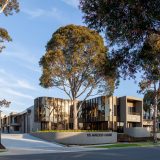
At 7:45am on a Tuesday in one of Melbourne’s northern growth corridors, the car park outside a purpose-built early learning centre is already filling. A father in high vis jogs a toddler through the gate before an 8am shift. A mother juggles a school bag, a lunch box and a wriggling two-year-old, all at once. Inside, educators greet each child by name. By 9am, the centre is full with one hundred children, humming with the noise of a suburb growing faster than almost anywhere else in the country.
None of this looks like commercial property. But somewhere in the paperwork behind that gate sits a twenty-year net lease, a government-backed subsidy stream, and a yield that institutional investors are currently competing hard to buy.
That is the story of Australian childcare property in 2026: one of the most quietly contested corners of commercial real estate, and one where the rhythms of everyday family life and the fundamentals of a triple-net investment have become almost impossible to separate. For GrayJohnson’s clients, whether you hold a single centre, manage a diversified portfolio, or are weighing childcare as your next commercial acquisition — understanding that intersection now matters. Here is what our research, and the broader market, is telling us.
A RECORD YEAR, AND A MARKET GROWING UP
Childcare has moved from niche alternative asset to mainstream institutional target. National transaction volumes hit a record $1.44 billion in 2025 — nearly double the amount transacted three years earlier — with a further $188 million changing hands in the first quarter of 2026 alone. Yields have compressed by roughly 90–130 basis points over the past two years as that capital has chased a shrinking pool of prime, long-WALE assets.
The national median transaction yield has settled around 5% in early 2026, but that single number hides a widening gap between prime and secondary stock. Set against an RBA cash rate holding at 4.10%, the margin between government-backed income and the cost of capital is the narrowest it has been in years — which means pricing discipline, lease quality and covenant strength now matter more than the headline yield itself.
Market benchmarks
| Benchmark | Melbourne Metro | Sydney Metro | Regional VIC | National |
| Typical investment yield | 4.80% – 5.50% | 4.25% – 5.00% | 5.25% – 6.25% | 4.75% – 6.00% |
| Rent per licensed place | $3,500 – $4,300 | $3,800 – $4,800 | $2,800 – $3,500 | $3,500 – $4,200 |
| Average WALE remaining | 14.5 – 20 yrs | 15.0 – 20 yrs | 12.0 – 15 yrs | 15.0 yrs |
| Annual rent review | 3.0–3.5% / CPI | 3.0–3.5% / CPI | 2.5–3.25% / CPI | 3.0% fixed / CPI |
| Lease structure | Triple Net | Triple Net | Triple / Double Net | Triple Net |
Sources: CBRE, Ray White Group, Stonebridge Property Group, Colliers, RBA — collated and cross-checked by GrayJohnson research, mid-2026.
POLICY TAILWINDS UNDERWRITING THE SECTOR
Three federal settings introduced or expanded in the past twelve months are doing more to de-risk childcare income than any single market force:
– The 3-Day Guarantee — effective 5 January 2026, this removes the CCS activity test and lifts subsidised access to a floor of 72 hours per fortnight, extending support to roughly 67,000 additional families and backed by $426.7 million in extra CCS spending. For landlords, it puts a floor under occupancy that simply didn’t exist eighteen months ago.
– Worker Retention Payments — a 10% wage subsidy in year one and 5% in year two, backed by $3.6 billion in federal funding, tied to operators capping annual fee increases at 5.8%. This has eased staffing shortages and let centres reopen previously unstaffed rooms, directly lifting tenants’ rent-cover.
– The Building Early Education Fund — $1 billion committed nationally, split between $500 million in direct grants to providers and $500 million for the Commonwealth to build and lease its own centres in underserved suburbs, a signal of the depth of long-term government commitment to the asset class.
Layered on top, the Early Childhood Education and Care (Strengthening Regulation of Early Education) Act 2025 and the National Early Childhood Worker Register, live since early 2026, are lifting compliance costs for operators — but also lifting the bar, and the value, of modern, purpose-built, fully compliant buildings over ageing stock.
Each of these settings does the same thing for a landlord: it reduces the probability that your tenant misses a rent payment, and it rewards owners of modern, compliant buildings over owners of ageing stock.
— GrayJohnson Research
MELBOURNE AND VICTORIA IN FOCUS
Victoria added more than 130,000 people in 2024 alone, and the state’s population is projected to reach 8.7 million by 2035. That growth is concentrated heavily in Melbourne’s outer north and west — Hume, Whittlesea, Melton and Wyndham — where new housing estates are consistently outpacing childcare supply, and where affordable industrial-zoned land, averaging $850–$1,000 per square metre for sites between one and five hectares, is opening the door to purpose-built and mixed-use development.
Recent transactions bear this out. A newly built, 100-place centre in Craigieburn, leased to Nino Early Learning Adventures (trading as Elevation Early Learning) on a 20-year net lease to 2045 with two further 10-year options, changed hands on the strength of that long-WALE, blue-chip covenant and its position inside one of Melbourne’s fastest-growing residential corridors. In regional Victoria, a fully-leased centre in Bendigo’s Golden Square sold for $6.5 million reflecting a 5.95% yield on a 20-year lease — one of the first early learning transactions completed in 2026, and a sign that quality regional assets are drawing the same institutional interest as their metro counterparts.
But growth is not uniform, and treating Victoria as a single market is where less experienced owners come unstuck. Supply is already bunching in some established suburbs — Glen Eira and Caulfield, for example, now sit at an oversupplied 0.69 approved places per child, against a national average of 0.47 — while corridors such as Dandenong (0.31 places per child) remain genuinely undersupplied. Reading this suburb by suburb, rather than trusting the state-wide headline, is where good asset management earns its fee.
READING THE FINE PRINT: NOT ALL CHILDCARE ASSETS ARE EQUAL
Growth in this sector is no longer automatic. As more capital and more operators compete for the same stock, the spread between prime and secondary assets is widening rather than narrowing. Two centres with identical rent can now sit 100 basis points or more apart in yield, purely because one carries a fifteen-year triple-net lease to a national operator and the other an eight-year lease to a single-site tenant on a personal guarantee. For owners, that makes four disciplines non-negotiable:
A four-point discipline for childcare owners
Lease audit and WALE extension — approach strong-covenant tenants early to lock in 15–20 year terms; a longer WALE materially lifts capital value.
Triple-net enforcement — confirm all outgoings (statutory charges, repairs, structural compliance) are genuinely passed through, insulating owners from rising land tax, rates and insurance.
Covenant and occupancy monitoring — track tenant financial health and NQS compliance at every quarterly review; a financially healthy, compliant operator is still the best guarantee of rent.
Capex and compliance reviews — proactively inspect fencing, access control, outdoor shade and air filtration so the building keeps pace with Quality Area 2 requirements and protects residual value.
WHY CHILDCARE OWNERS ARE TURNING TO GRAYJOHNSON
GrayJohnson has spent more than a century navigating Melbourne’s commercial property cycles, and our dedicated Childcare team applies that experience to one of the market’s most technical asset classes. We work with owners, developers and investors across acquisition, leasing, asset management and development advisory — including site selection, zoning compliance and operator partnerships — with particular depth in the growth corridors now driving demand: Hume, Whittlesea, Melton, Wyndham and the wider north and west.
As this update makes clear, childcare property increasingly rewards active management over a “set and forget” approach — chasing WALE extensions, enforcing outgoings recovery to the letter, and staying ahead of NQS and worker-register compliance before it affects a tenant’s licence. That is precisely the discipline our asset management and agency teams bring to every childcare mandate, backed by GrayJohnson’s broader read on Melbourne’s commercial and industrial land markets, population growth corridors, and mixed-use development opportunities.
If you own, manage or are considering acquiring a childcare asset, we will welcome the opportunity to provide a confidential portfolio review or acquisition appraisal. Contact GrayJohnson’s Childcare team via grayjohnson.com.au to arrange a conversation.
OUTLOOK: 2026–2028
– Childcare is consolidating its position alongside logistics and medical centres as a top-tier defensive commercial asset class, underpinned by bipartisan government funding commitment.
– The capital value gap will keep widening between prime, modern, purpose-built centres with strong covenants and older, secondary facilities facing rising capex needs.
– Built-in annual increases of 3.0–3.5% should keep landlord income broadly in step with, or ahead of, the wider commercial property sector over the next three to five years.
– Expect continued divergence at the suburb level — oversupply in some established pockets, genuine undersupply in fast-growing corridors — making local market intelligence, not state-wide averages, the deciding factor in acquisition and asset management decisions.
This update is prepared by GrayJohnson for general information purposes and does not constitute investment, financial or legal advice. Figures are drawn from CBRE, Ray White Group, Stonebridge Property Group, Colliers, the Reserve Bank of Australia and the Australian Government Department of Education, current as at July 2026, and should be independently verified before use in any transaction decision.